
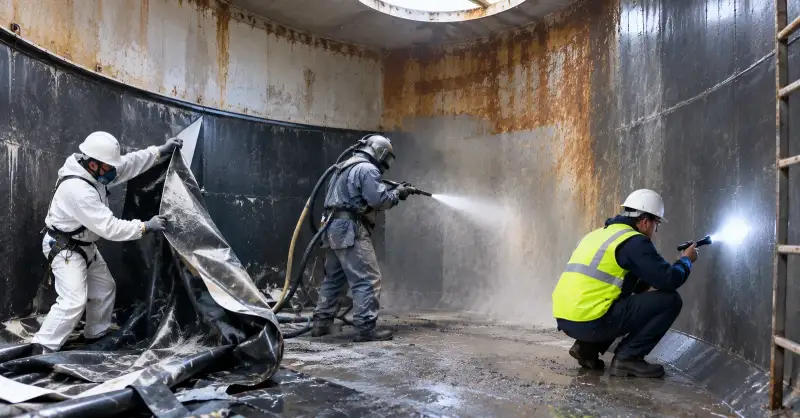
Replacing a tank liner is not a matter of stripping out the old material and putting something new in its place. The condition of the steel or other substrate beneath that liner determines how well the replacement system can perform. If the old liner has failed, the work needs to address what caused the failure, what remains on the surface, and what condition the tank is actually in once the old material is gone. We treat removal, blasting, and inspection as connected stages because each one reveals information that matters to the next.
Start by Removing the Failed Liner
An aging liner can hide more than it protects. Delamination, trapped residue, corrosion, damaged areas, and weak coating material may not be obvious until the existing system is removed. Trying to leave questionable material in place and coating over it can create a weak interface between the old surface and the new system. That is not a sound foundation for long-term protection. We first focus on removing failed liner material cleanly enough to expose the substrate and give the inspection process a useful starting point. The point is not to make the tank look better for a day. It is to find out what condition the tank is really in.
Blasting Does More Than Clean the Surface
Once the old liner is removed, abrasive blasting becomes an important part of the preparation work. Conventional cleaning can take care of loose dirt and some surface residue, but it does not necessarily produce the surface required for a new protective coating. Blasting can remove remaining coating, firmly bonded contaminants, corrosion products, and other material that could interfere with adhesion. It also creates the appropriate surface profile for the specified coating system. With tank interior blasting and coating, the preparation standard matters because the new material is only as dependable as the surface it bonds to. This is one area where rushing the job can cause problems that do not show up until much later.
Inspection Should Happen With the Surface Exposed
Inspection is far more useful when the old liner and coating are no longer hiding the substrate. Once the surface is exposed, we can assess areas that were previously inaccessible and determine whether additional preparation is necessary. The inspection may reveal corrosion, surface defects, remaining contamination, or other conditions that need attention before coating begins. It also provides an opportunity to verify that the preparation meets the requirements of the specified lining system. In practical terms, this is where assumptions give way to evidence. You can make a reasonable plan before the work starts, but the exposed tank tells you what actually needs to be done.
Why Removal, Blasting, and Inspection Belong Together
These stages are not independent tasks that happen to occur on the same project. They form a chain. Removing the old liner exposes the substrate. Blasting prepares that substrate for closer evaluation and coating. Inspection then confirms whether the surface is ready or whether more work is needed. A properly managed replacement may include:
- Removing failed liner and loose coating material
- Abrasive blasting to prepare the exposed substrate
- Inspecting for corrosion, contamination, defects, and remaining coating
- Verifying surface preparation before the new liner is applied
Breaking that chain can leave an issue unresolved beneath the replacement system. Once a new liner covers the surface, going back to investigate a hidden problem becomes far more difficult.
The Coating System Starts With the Substrate
Choosing a storage tank coating system in Texas is only part of the job. The coating itself has to be compatible with the tank, its service conditions, and the prepared substrate. That makes surface preparation a practical part of coating selection rather than a separate preliminary chore. A coating manufacturer can specify application requirements, but those requirements still have to be met in the field. Surface condition, cleanliness, profile, environmental conditions, and application procedures all have a bearing on the finished system. The details may not be visible once the tank is back in service, but they are reflected in how the coating behaves over time.
What We Look For Before Coating
A tank interior can look acceptable at first glance and still need additional preparation. This is why we do not treat visual appearance as the final measure of readiness. The exposed surface needs to meet the requirements established for the particular lining system, and any remaining contamination or questionable material needs to be addressed before application. Good preparation is often less dramatic than the coating itself, but it is where much of the quality control happens. With tank interior blasting and coating, the real objective is to leave the surface in a condition where the new system has a fair chance to perform as designed.
Conclusion
A failed liner is a reason to investigate the tank, not simply replace what is visible. Removing the old system, preparing the exposed substrate, and inspecting the result gives us a much clearer picture of the work required before a replacement liner goes in. That approach also helps prevent old surface problems from being sealed beneath new material. At gvms1, we work through the preparation process with the condition of the tank and the requirements of the new lining system in mind. If your tank liner is showing signs of failure or needs replacement, contact us to discuss the condition of the tank and the preparation required for the next protective system.
FAQs
1. Why should a failed tank liner be removed before applying a new one?
Removing the failed liner exposes the substrate and prevents damaged or contaminated material from being trapped beneath the replacement system.
2. What does abrasive blasting accomplish during tank liner replacement?
Abrasive blasting removes remaining coating, contaminants, and corrosion products while creating the surface profile needed for proper coating adhesion.
3. Why is inspection important after removing a tank liner?
Inspection reveals corrosion, surface defects, contamination, and other conditions that may require attention before the new liner is applied.
4. Can a new tank liner be applied over an existing liner?
Applying a new liner over a failed existing system can leave underlying problems unresolved and compromise the performance of the replacement system.
5. What determines whether a tank interior is ready for a new liner?
The surface must meet the specified requirements for cleanliness, preparation, profile, and overall substrate condition before the new liner is applied.
