
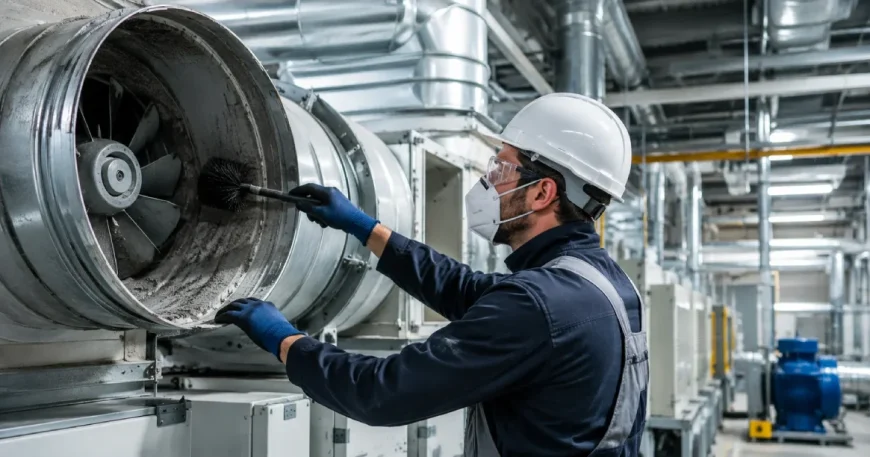
Ventilation systems tend to disappear into the background when they are doing their job well. Air moves, fans run, the HVAC equipment keeps up, and nobody gives much thought to what is happening above the ceiling or behind a piece of machinery. Industrial environments are different, though. Dust, grease, moisture, and airborne debris can find their way into ducts and around equipment over time. A well-planned industrial ventilation maintenance routine gives us a practical way to keep track of those conditions before they become part of the everyday operation.
Start With a Detailed System Inspection
The first step is fairly simple: look closely at what is already there. We inspect accessible ductwork, vents, fans, filters, connections, and other HVAC components for buildup, wear, damage, or anything that seems out of place. A loose connection or restricted section of ductwork may not announce itself immediately, which is why scheduled inspections are useful. They give us a chance to see the condition of the system as a whole and decide where maintenance effort is actually needed. That is more useful than applying the same checklist blindly to every facility.
Keep Ductwork Clean and Accessible
Ductwork is one of those parts of a facility that can be forgotten simply because it is not always visible. Sections may run above ceilings, behind equipment, or through areas that staff rarely enter. Meanwhile, dust, dirt, grease, and other material can gradually settle inside. The amount of buildup depends on the facility, the work being performed, and the environment around the system. Regular cleaning of appropriate areas helps keep air pathways clear, while good access makes future inspections and service much easier. In practice, both matter.
Check Filters and Airflow Regularly
Filters deserve attention because they are meant to collect airborne material, and that material does not simply disappear. As a filter loads up, airflow can change, so we inspect filters according to the equipment requirements and the conditions in which the system operates. Replacement should be based on the appropriate maintenance criteria rather than guesswork. We also pay attention to airflow because it can tell us something about the system’s condition. If air is not moving as expected, there may be a restriction or component issue worth investigating.
Inspect Fans, Vents, and Mechanical Components
A ventilation system is not just a network of ducts. Fans, dampers, vents, connections, and other mechanical components all have a role in moving and distributing air. During scheduled service, we look for visible wear, buildup, loose connections, damage, and changes in component condition. Depending on the system, useful inspection points can include:
- Fan condition and operation
- Duct and system connections
- Vent openings and accessible surfaces
- Filter condition
- Damper function
- Areas with unusual buildup or debris
None of these checks is particularly complicated on its own. The important part is consistency. A small observation recorded during a routine inspection can become useful information when the system is reviewed months later.
Build the Schedule Around the Facility
There is no sensible reason to force every industrial facility into the same maintenance timetable. A system operating in a dusty environment may need attention more often than one serving a cleaner workspace. Operating hours, equipment type, system design, airborne material, and the nature of the work all influence the maintenance interval. We build the schedule around those conditions. Routine inspections, duct cleaning, filter checks, airflow evaluations, component inspections, and service records can all form part of that plan. Good records are particularly helpful because they show what has been done and make recurring patterns easier to spot.
Consider Ventilation During Construction and Upgrades
Ventilation needs to be part of the conversation when a facility is being changed, repaired or expanded. Construction can stir up dust and debris, and new equipment or changes to the layout might affect the way air passes through an existing space. Such considerations are far easier to deal with during the design of the project than to try to fix once everything has been completed. This is particularly the case when working with offshore construction services in Texas, where several job activities may need to be coordinated around existing systems and challenging operating circumstances.
Keep Maintenance Consistent
The most successful maintenance program often is the one that fits into the facility’s routine easily. Regular inspections, proper cleaning, filter care, component checks, and clear records also give a better understanding of how the system is working over time. Instead of waiting for a visible change, we can operate based on real observations and maintenance history. At GVMS 1, LLC, we understand the real-world pressures that industrial and marine settings may have on HVAC and ventilation systems.
Conclusion
Good ventilation care does not have to be complicated. It’s important to regularly take care of the system, clean the proper locations, check the essential components, and keep valuable records as you go. Consistent application of the technique simplifies understanding the health of the equipment and planning service around the real needs of the facility. If you require professional help with your HVAC, duct, or ventilation systems, get in touch with our team now to talk about your facility and maintenance needs. We can assist you in finding a practical method that suits how your organization really works.
FAQs
How often should industrial ventilation systems be maintained?
The ideal maintenance frequency depends on the facility, operating hours, equipment, and surrounding conditions. A routine inspection schedule helps us determine when cleaning, filter checks, and component servicing are needed.
What does industrial ventilation maintenance typically include?
It can include duct inspections, cleaning, filter checks, airflow evaluations, fan inspections, connection checks, and reviews of other ventilation components. The exact work depends on the system and facility requirements.
Why is duct cleaning important for industrial ventilation systems?
Regular duct cleaning helps remove accumulated dust, dirt, grease, and other debris from appropriate areas. Keeping air pathways clean can support consistent airflow and make routine system inspections easier.
Can ventilation maintenance be included in an offshore construction project?
Yes, ventilation and HVAC requirements can be considered alongside construction, repairs, upgrades, and other project activities. Planning these needs early helps us account for existing systems and changing facility conditions.
How can GVMS 1, LLC help with ventilation and HVAC maintenance?
We can discuss your facility, existing systems, operating conditions, and maintenance requirements to determine a practical approach. Contact our team to discuss the service needs of your industrial or marine facility.
