
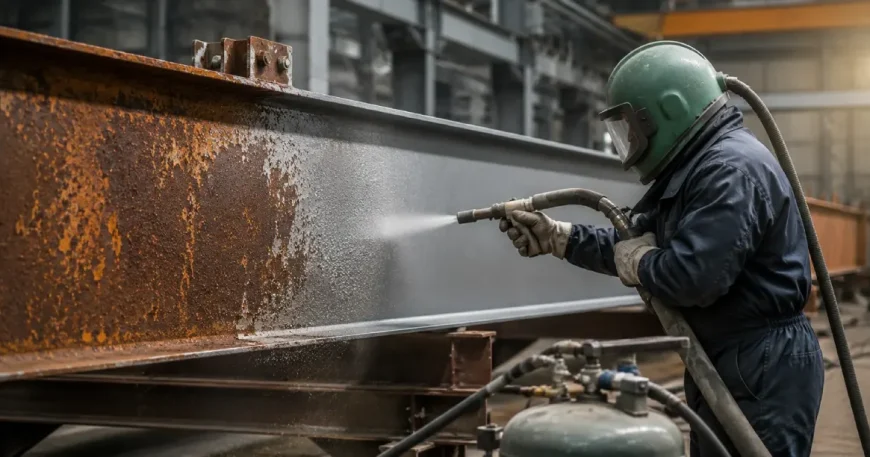
A fresh coat of paint on old equipment can look like a finished job, and when it’s done right, it is. The difference between a coating that lasts and one that fails early almost always comes down to what happened before anyone picked up a sprayer, underneath, where rust, failed coatings, grease, scale, and salt build-up get handled properly, or they don’t. In offshore and industrial settings, surface preparation isn’t a step you rush through to get to the “real” work. It is the real work, and it’s the part that determines whether everything after it actually holds up. When corrosion has already taken hold on exposed steel, offshore rust removal services bring that surface back to a condition a coating can genuinely bond to, and that groundwork is exactly where a good outcome starts.
Why Surface Prep Isn’t Optional
A coating performs as well as the surface underneath it allows, which is why we treat that surface with the same seriousness as the coating itself. Loose paint, active corrosion, or leftover contamination becomes the new coating’s problem the moment it’s sealed underneath, so we make sure none of that gets the chance. Offshore and industrial equipment faces constant exposure to salt, humidity, chemical residue, temperature swings, and mechanical stress, and that’s exactly the kind of environment where careful preparation pays off the most. We treat preparation as maintenance in its own right, not a formality before the paint arrives, because getting this stage right is what gives a coating system the best possible chance to perform for years, not months.
Read the Surface Before You Touch It
No two corrosion jobs are the same, and part of doing this work well is never treating them like they are. One surface might have a thin skin of oxidation. Another might carry several layers of old paint with corrosion developing underneath, invisible until the stripping starts. Before choosing a method, we take a close look at:
- The material the equipment is actually made of
- The condition of whatever coating is already there
- How far the corrosion has spread beneath the surface
- How accessible the area is, physically and logistically
- What the finished surface needs to look like before recoating
That groundwork is what lets us match the right method to the right job, whether that’s laser cleaning, hydro blasting, or another approach entirely. The job dictates the method, and getting that match right the first time is where real value gets delivered.
Getting Rid of Rust, Paint, and Everything Else
This is the stage where the transformation becomes visible, and it’s a satisfying one to watch, but the real skill is in how it’s done. The goal is removing corrosion and failed coatings thoroughly, without damaging the substrate underneath, so the surface comes out both clean and structurally sound. Laser cleaning offers precise, controlled removal on complex or sensitive substrates. Hydro blasting covers ground efficiently on larger industrial surfaces where scale and speed matter. Offshore work adds another layer of consideration on top, since the method also has to hold up against salt spray, wind, and tight working conditions, and choosing the right one for the site is where experience really shows.
Offshore Work Comes With Its Own Rules, and We’re Built for Them
Offshore surface prep isn’t industrial work with a few extra steps bolted on. Saltwater exposure and constant moisture accelerate corrosion faster than most shore-side facilities ever have to deal with, and access to equipment is often dictated by the structure itself. You can’t always unbolt a component and haul it to a shop, and honestly, you shouldn’t have to. That’s exactly why mobile cleaning capability matters, and it’s a core part of what we bring to a project. Bringing the right equipment directly to the platform, vessel, or structure means the work gets done on schedule, in place, without the downtime and cost of relocating heavy assets.
Picking the Right Method for the Job
If you’re evaluating an industrial laser cleaning contractor in Texas, look past the name of the technology and toward the thinking behind it. A laser is a tool, and the value comes from the contractor who knows how to use it, understands how different substrates and coating systems respond, and reads the actual conditions at the worksite rather than applying a one-size approach. Before we choose a method, we work through a clear set of questions:
- What type and severity of corrosion are we dealing with
- What condition is the existing paint or coating in
- What material lies underneath the unwanted layer
- What do access and working conditions look like on site?
- What surface condition does the job require once cleaning is done?
- What coating system is planned for the next stage
That process is what separates a contractor who shows up with equipment from one who shows up with a plan, and it’s the reason clients trust us with jobs where there’s no room for guesswork.
When Is the Surface Actually Ready?
Metal that looks clean isn’t automatically metal that’s ready for a new coating, and this is a stage we never let get rushed, even when the hard, visible part of the job is already behind us. Once rust, paint, and contamination are removed, we evaluate the surface against exactly what the next coating system requires, matching surface profile, cleanliness, and condition to the coating specification and the environment it needs to survive in. This is where careful, unhurried attention makes the biggest difference to how long the finished job actually lasts, and it’s a step we take just as seriously as the removal itself.
Prep and Recoating Are the Same Job, Not Two Jobs
Rust removal and recoating aren’t separate tasks that happen to be scheduled back to back. They’re one maintenance cycle, and we plan them that way from the start. Removing corrosion matters, but the real objective is building a surface that supports the next protective layer for as long as that layer is designed to last. For offshore platforms, industrial facilities, marine equipment, and large structures, that means treating the surface condition, cleaning method, site environment, and coating requirements as connected parts of one job, which is exactly the approach that gives clients coatings that go the distance. Good preparation gives a coating the best possible start, and that’s the standard we hold every project to.
Conclusion
At GVMS 1, LLC, we provide mobile rust and coating removal solutions built for industrial and offshore applications, and we bring the experience, equipment, and attention to detail that make surface preparation something you can rely on. If your equipment or structure needs preparation before recoating, reach out, and we’ll walk through the surface condition, site requirements, and cleaning approach that fits your project best. A recoating job that lasts starts with getting the surface right, and that’s where we come in.
FAQs
What does industrial surface preparation involve before recoating?
We remove rust, old coatings, grease, scale, and other contaminants, then prepare the underlying surface for the coating system that will follow.
How do we know which rust removal method is best for an industrial surface?
We consider the substrate, corrosion level, existing coating, site conditions, accessibility, and the surface requirements before recommending a suitable approach.
Can surface preparation be performed on large offshore equipment?
Yes, our mobile capabilities allow us to bring specialized rust and coating removal equipment directly to large assets at their worksite.
Why does proper surface preparation matter for a new coating?
A clean, properly prepared substrate gives the new coating a better foundation and helps prevent existing corrosion or contaminants from interfering with the coating system.
What makes mobile rust and coating removal useful for industrial projects?
We can perform the work at the location of the equipment or structure, which can simplify logistics when moving large or fixed assets is impractical.
