
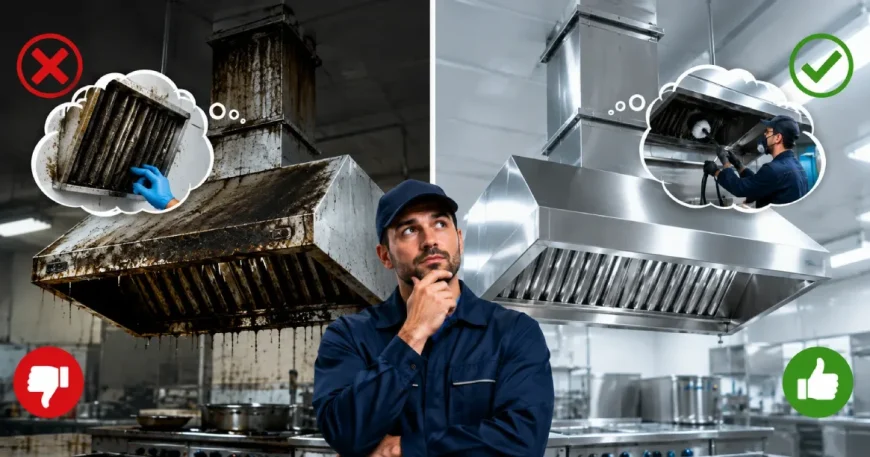
Industrial exhaust systems do a job most people barely notice. They pull heat, smoke, grease, moisture, and airborne residue away from cooking areas and move it through a network of hoods, ducts, fans, and exhaust points. Because much of that system sits out of sight, its condition can be easy to misjudge. A hood may look reasonably clean while residue has settled deeper inside. That is where a few common assumptions about exhaust cleaning start to cause trouble.
Myth 1: If the Hood Looks Clean, the Whole System Is Clean
A clean-looking hood is a good start, but it tells us very little about what is happening farther inside the system. Cooking produces grease and fine particles that can travel with the exhaust air and settle on internal surfaces. Some areas are visible and easy to wipe, while others are tucked away in ductwork or around connected equipment. Professional industrial kitchen hood cleaning takes those less visible areas into account instead of judging the system by what can be seen from the floor.
Myth 2: Regular Wiping Is Enough
Daily or routine cleaning has an important role in keeping a galley or industrial kitchen orderly. It removes fresh residue before it has much chance to harden and keeps accessible surfaces in better condition. But a cloth and degreaser cannot reach every part of an exhaust system. Grease can collect in places that are awkward, enclosed, or simply outside the scope of routine housekeeping. That is why deeper professional cleaning still has a place in a proper maintenance program.
Myth 3: Exhaust Ducts Only Need Cleaning When Something Goes Wrong
This one is understandable because exhaust systems can continue running even as residue builds inside them. Nothing may appear unusual at first. The fan still operates, air still moves, and the kitchen remains functional. Meanwhile, deposits can gradually accumulate in areas that are not regularly inspected. Kitchen exhaust duct cleaning is more useful when treated as planned maintenance rather than a response to an obvious issue. Staying ahead of buildup generally gives maintenance teams a much clearer picture of the system’s condition.
Myth 4: Every Industrial Exhaust System Can Be Cleaned the Same Way
Industrial sites are not interchangeable. An offshore galley, a processing facility, and a commercial kitchen can have very different layouts, access restrictions, equipment, and cleaning requirements. Even two similar systems may present different challenges once technicians are on site. We look at the actual installation before deciding how the work should be approached. Access, the type of residue present, the construction of the system, and the surrounding operating environment all matter.
Myth 5: Professional Exhaust Cleaning Is Mainly About Making Things Look Better
There is nothing wrong with a cleaner-looking hood, but appearance is hardly the main reason to clean an exhaust system professionally. The important work often happens where nobody can see it. Removing accumulated grease and residue from internal and connected components gives maintenance teams a better-maintained system to work with and reduces the amount of material left sitting inside the exhaust path. A visual improvement is simply one of the more obvious results.
What Should Professional Cleaning Cover?
Depending on the system and site requirements, a professional service may focus on areas such as:
- Hood surfaces and internal areas
- Accessible sections of exhaust ductwork
- Fans and related exhaust components
- Grease and residue deposits
- Areas that are difficult to reach during routine cleaning
At GVMS 1, LLC, we approach industrial cleaning with the realities of the site in mind. Offshore and industrial facilities can have restricted access, demanding schedules, large equipment, and systems that need to remain part of an organized maintenance plan. Good cleaning is not about applying the same routine everywhere. It is about understanding what is installed, where buildup is likely to occur, and how the work can be carried out properly.
Conclusion
Most exhaust cleaning misconceptions come from judging a system by what is easiest to see. A hood can look clean while internal surfaces need attention. A fan can keep running while residue continues to collect elsewhere. Routine housekeeping can keep visible areas presentable without replacing the deeper work required inside the exhaust system. Professional industrial kitchen hood cleaning gives facility teams a more complete way to address that hidden buildup and keep cleaning aligned with ongoing maintenance.
If your offshore or industrial facility needs professional exhaust cleaning, contact us today to discuss your system and determine the right cleaning approach for your site.
FAQs
Does a clean kitchen hood mean the entire exhaust system is clean?
No. Grease and residue can collect inside ducts, fans, and other areas that are not visible during routine cleaning.
How often should industrial exhaust systems be professionally cleaned?
The right schedule depends on system use, cooking activity, residue levels, and site conditions. A professional assessment can help establish an appropriate maintenance routine.
Can routine wiping replace professional exhaust cleaning?
No. Regular wiping handles accessible surfaces, while professional cleaning addresses buildup in harder-to-reach parts of the exhaust system.
Why is professional exhaust cleaning important for offshore facilities?
Offshore systems can have restricted access and demanding operating conditions. Professional cleaning helps address residue in areas that routine maintenance may not reach.
What areas are typically included in industrial exhaust cleaning?
Depending on the system, cleaning may include hood surfaces, internal areas, ductwork, fans, and other components where grease and residue can accumulate.
