
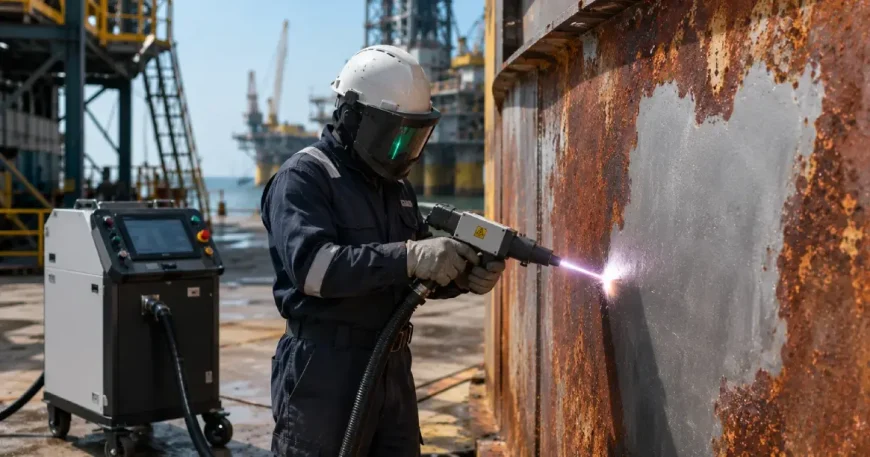
Surface preparation is easy to overlook because most of the important work happens before the new coating ever goes on. On an industrial or offshore site, steel and equipment can pick up rust, salt, grease, old paint, scale, and general grime simply from doing their job in a demanding environment. If that buildup is left in place, it can get in the way of coating adhesion and make later maintenance harder. Mobile blasting takes the preparation work to the asset itself, which makes practical sense when a tank, vessel, pipeline, structural component, or large piece of machinery is not something you can simply load onto a truck and take somewhere else.
What Is Mobile Blasting?
Mobile blasting is a surface preparation method performed directly at the jobsite using specialized blasting equipment. The process directs a selected abrasive media at the surface under controlled conditions to remove unwanted material and expose a cleaner substrate. What gets removed depends on the job. It may be corrosion, an aging coating, scale, grease, dirt, or several layers of buildup that have accumulated over years of service. Before any work begins, we look at the substrate, existing coating, contamination, access, and the condition required for the next stage. An experienced industrial laser cleaning contractor in Texas can use that assessment to determine whether the planned cleaning approach suits the surface and the project.
How Does Mobile Blasting Work?
Good blasting starts with preparation, not with turning on the equipment. We first examine the work area and identify what needs to come off without unnecessarily affecting the underlying material. Equipment is then positioned as close to the work area as practical, and the blasting process is carried out with attention to pressure, media selection, distance, and coverage. Those details matter because a heavily corroded steel surface and a coated component in better condition do not necessarily call for the same treatment. Site conditions also influence how the work is contained and how dust, debris, and spent media are managed. The goal is straightforward: remove the unwanted material while leaving the surface in a condition suitable for whatever comes next.
What Can Mobile Blasting Remove?
Industrial surfaces rarely collect just one type of contamination. A component that has spent years outdoors or in a marine environment may have several layers of material on it, each requiring a slightly different approach. Depending on the substrate and project requirements, mobile blasting can address:
- Rust and corrosion
- Old paint and coatings
- Grease and oil residue
- Scale and deposits
- Dirt and debris
The important part is not simply making the surface look cleaner. We need to understand what is being removed, what lies underneath it, and what condition the surface needs to reach before coating, inspection, repair, or another maintenance step can begin.
Why Choose On-Site Surface Preparation?
Transporting large industrial equipment is rarely as simple as moving an ordinary machine. Tanks may be permanently installed, pipelines can span large areas, and offshore structures obviously cannot be brought back to a workshop for convenience. On-site preparation removes one of those logistical headaches by bringing the equipment and crew to the asset. For companies evaluating mobile blasting services in Texas, that can make the work easier to coordinate, particularly when the equipment is already part of an operating facility or maintenance schedule. It also means the preparation process can be planned around the actual site instead of forcing the site to adapt to an off-site facility.
Where Can Mobile Blasting Be Used?
The applications are broad because the need for surface preparation exists across many industrial environments. We can work around equipment and structures found in industrial plants, offshore facilities, marine operations, storage areas, pipelines, heavy equipment yards, and similar settings. The surface itself determines much of the approach. Structural steel, painted equipment, tanks, vessels, and other components each have their own considerations, and access can be just as important as the material being cleaned. Tight spaces, elevated structures, surrounding equipment, and active work areas all need to be considered before the blasting begins.
Why Surface Preparation Matters Before Recoating
A new coating does not fix a poorly prepared surface. If rust, loose paint, grease, salt, or other contamination remains underneath, the coating may struggle to bond properly, and the finished system may not provide the protection expected from it. Proper preparation gives the coating a sound surface to adhere to and allows the condition of the underlying material to be seen more clearly. This is one reason surface preparation deserves attention rather than being treated as a quick step before painting. Working with an industrial laser cleaning contractor in Texas can help facility managers determine what the surface actually needs before moving ahead with the next maintenance stage.
A Practical Approach to Industrial Maintenance
There is no useful one-size-fits-all blasting recipe for industrial work. The substrate, coating, contamination, location, access, and intended finish all influence the process. We approach each project by looking at those conditions first, then selecting equipment and methods that make sense for the job. That practical approach is especially valuable offshore, where access is limited, and every piece of equipment brought to the site has a purpose. When preparation is handled properly, the work becomes more than surface cleaning. It becomes part of a maintenance plan designed around the actual asset and its working environment.
Conclusion
Mobile blasting gives industrial and offshore operators a way to handle demanding surface preparation without automatically moving large or difficult assets off-site. Whether the goal is to remove an old coating, address corrosion, clean accumulated residue, or prepare a surface for recoating, the right process begins with understanding the condition of the asset. If your equipment or structure needs professional surface preparation, contact our team at GVMS 1, LLC, to discuss the site, the surface, and the work you need completed. We can help you determine the right approach and get the asset ready for its next stage of maintenance.
FAQs
What is mobile blasting used for?
Mobile blasting removes rust, old coatings, grease, scale, dirt, and other buildup directly at the jobsite. It helps prepare industrial and offshore surfaces for coating, inspection, repair, or maintenance.
Can mobile blasting be performed on large industrial equipment?
Yes, mobile blasting is well suited for tanks, pipelines, vessels, machinery, and structural steel that may be difficult to transport. We bring the required equipment directly to the asset.
How does mobile blasting prepare a surface for recoating?
The process removes unwanted materials and exposes a cleaner substrate for the new coating. Proper preparation helps create a suitable surface for coating adhesion and long-term protection.
Where can mobile blasting be performed?
Mobile blasting can be carried out at industrial plants, offshore facilities, marine sites, storage areas, and heavy equipment yards. The approach is planned around the surface, access, and conditions at each site.
Why choose professional mobile blasting for industrial surfaces?
Professional surface preparation takes the substrate, existing coating, contamination, and intended finish into account. This helps ensure the surface receives the appropriate level of preparation before the next maintenance stage.
