
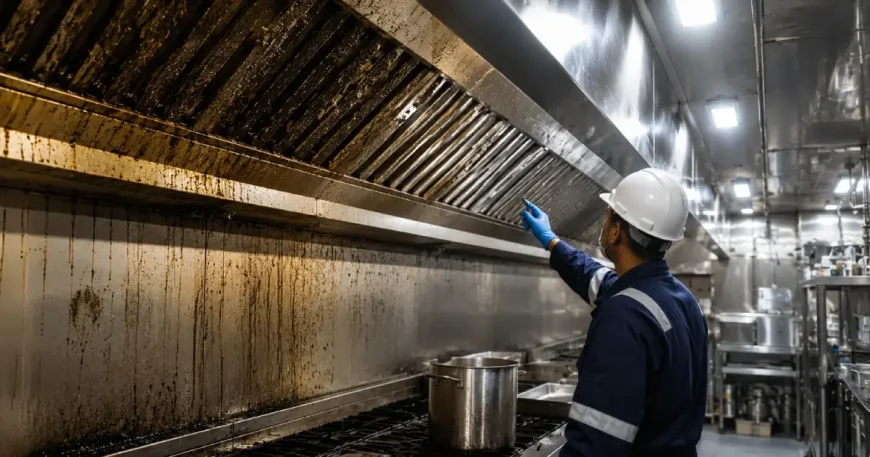
A galley on a rig or a vessel never really shuts down. Meals go out around the clock, exhaust fans run without a break, and grease finds its way into every corner of the hood, the ductwork, and the fan housing, whether anyone’s paying attention or not. Most crews don’t think twice about the exhaust system until something forces the issue: a strange smell drifting through the mess, a fan that sounds like it’s working too hard, maybe a flare-up that had no business happening.
By the time any of that shows up, the buildup has usually been sitting there a lot longer than anyone realized. Knowing what to look for matters because catching it early is the difference between a routine service call and a real fire hazard, which is exactly why so many offshore operators schedule Offshore Marine Galley Hood Cleaning long before things get to that point.
Grease You Can Actually See
This one’s easy to spot, assuming somebody actually looks. A film along the hood’s edges, drip marks near the filters, that sticky residue on nearby surfaces, all of it points to an overdue system. Grease doesn’t just sit still once it builds up. It travels through the ductwork, coats the fan blades, and settles into spots you’d never reach without pulling things apart. If the outside of the hood looks bad, the duct run behind it is almost certainly worse.
The Fan’s Working Harder Than It Should
A galley exhaust system is supposed to pull smoke, steam, and cooking odors out fast. When that stops happening, when smoke hangs around longer than it used to or the kitchen just feels heavier and warmer than normal, that’s usually grease choking off airflow somewhere in the line. A fan fighting against a clogged duct also wears out faster than it should, which means more energy is spent and a shorter life for equipment that isn’t affordable to replace.
Smells That Won’t Go Away
Grease sitting in a duct for a while doesn’t stay inert. It breaks down and starts putting off a stale, almost burnt smell that clings around well after the last meal’s been served. If crew members are noticing odors in the galley, or worse, in nearby living spaces, even with the exhaust fan running, that’s a solid sign the system needs a real cleaning, not a quick wipe of the visible surfaces.
What’s Hiding Inside the Ductwork
Anyone who’s popped an access panel on a neglected exhaust system knows what a genuine grease problem looks like. Thick, tar-like buildup coating the duct interior or fan blades isn’t just unsightly; it’s flammable material sitting inside a system that runs hot for hours at a stretch. Left alone, that residue turns a maintenance item into an actual fire risk, and that risk only grows in the tight, enclosed spaces typical of offshore facilities.
Fire Risk Signs Nobody Should Ignore
Grease fires in commercial kitchens are about as preventable as hazards get, yet they keep happening because exhaust systems get ignored until it’s too late. Scorch marks near the hood, a fan running hotter than it used to, or any history of flare-ups near the cooktop deserve to be treated as a warning, not a coincidence. Offshore, the stakes climb even higher, since fighting a fire or evacuating a facility at sea is nowhere near as simple as it is on land.
Falling Behind on Compliance
Marine facilities operate under safety and hygiene standards that don’t bend much. A galley exhaust system that’s fallen behind on cleaning can drift out of compliance faster than people expect, and nobody wants to discover that during an inspection. Staying ahead of it through regular servicing beats scrambling to fix a citation after the fact, every time.
Why This Isn’t a DIY Job
Wiping down visible surfaces only gets you so far. The real risk lives inside the ductwork, behind the fan housing, in places you can’t reach without disassembly and the right tools for the job. GVMS 1, LLC handles this kind of cleaning specifically for marine environments, working through the hood, ductwork, exhaust fans, and interior surfaces to strip out grease and oil residue that a surface clean will always miss. The point isn’t just a hood that looks better. It’s a system that actually runs safely under the demands of round-the-clock offshore cooking.
Conclusion
A galley exhaust system rarely fails without giving some kind of warning first. There’s almost always visible buildup, a sluggish fan, a smell that won’t quit, or residue tucked inside the ductwork, pointing to trouble before anything serious happens. Paying attention to those signs and doing something about them early keeps crews safer and keeps the galley running the way it’s supposed to. GVMS 1, LLC offers Offshore Marine Galley Hood Cleaning built around the actual demands of marine facilities, focused on clearing out grease before it turns into a fire hazard, staying ahead of compliance, and keeping food prep areas genuinely clean for the people working offshore day in and day out.
FAQs
How often should offshore galley hood systems be professionally cleaned?
Most facilities schedule cleaning every few months, though heavy daily cooking use may call for more frequent service.
What signs suggest a cleaning was overdue by months, not weeks?
Thick, tar-like residue inside ducts, scorch marks near the hood, and persistent burnt odors all point to prolonged neglect.
Can crew members handle galley hood cleaning themselves?
Surface wiping helps, but grease inside ductwork and fan housings needs professional tools and disassembly to be removed safely.
Does galley hood cleaning affect compliance inspections?
Yes, marine safety and hygiene standards often require documented, regular cleaning to stay compliant with regulations.
What does a professional offshore galley hood cleaning service include?
It typically covers the hood, ductwork, exhaust fan, and interior surfaces to remove grease, oil, and fire hazards.
