
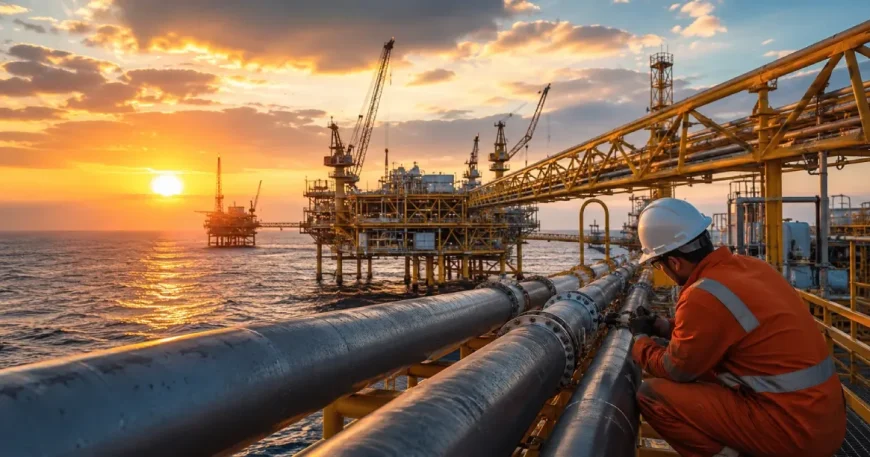
Offshore facilities ask a lot of their piping systems, more than most people outside the industry ever stop to consider. Every day, miles of pipe carry water, fuel, oil, gas, and process fluids through equipment that simply cannot tolerate a surprise interruption. Land-based pipelines don’t deal with what these systems face around the clock: salt-laden air, constant moisture, swinging temperatures, vibration that never really quits, and use that doesn’t let up.
None of those eases off, and neither does the wear that it grinds into the metal over time. Corrosion doesn’t usually announce itself with some dramatic failure. It creeps in quietly, spreads at its own pace, and only turns expensive once it’s been left alone too long. That’s really why routine maintenance is one of the smarter moves an offshore operator can make, and why so many turn to GVMS 1, LLC for dependable Marine Piping Restoration Services.
Offshore Conditions Leave Little Room for Neglect
The marine environment isn’t gentle on exposed steel. Saltwater, humidity, and airborne chlorides chip away at protective surfaces day after day, while pumps, compressors, and heavy machinery keep the whole piping network vibrating. Add pressure swings on top of that, especially in systems running nonstop, and you’ve got stress coming from every direction at once. None of this shows up as an obvious inflamed flag.
A pipeline can look perfectly fine on the outside while corrosion eats away beneath aging coatings or within the pipe wall itself. By the time a leak actually appears, the damage usually has a head start that catches people off guard.
That’s precisely why experienced maintenance crews spend their time hunting for problems before production has to find them the hard way.
Small Problems Rarely Stay Small
Most pipeline failures aren’t caused by one dramatic event. They’re the sum of a bunch of smaller things nobody dealt with. A slight pressure drop here, a patch of worn coating there, a bit of surface corrosion that seemed minor at the time. None of it looks urgent in isolation. Left alone, though, those small defects chip away at the whole system’s strength.
Offshore, the fallout goes well past the damaged section of pipe. Production stalls, equipment sits idle, repair logistics get complicated, and schedules fall apart. Getting crews and materials out to a rig isn’t simple on a good day, so repairs that could’ve been scheduled calmly often turn into emergencies nobody wanted.
Routine maintenance flips that script. Catching deterioration early means repairs happen on your timeline, not the pipe’s.
Why Restoration Often Makes More Sense Than Replacement
There’s a persistent assumption that an aging pipeline needs to be torn out and replaced. That’s often not the case. If the structural condition still holds up, restoration can extend that pipe’s working life considerably, without the cost and headache of installing a whole new system.
GVMS 1, LLC approaches restoration by actually assessing the condition of the existing pipeline first, then recommending whatever makes sense, not jumping straight to replacement. Rather than pulling out infrastructure that still has life left in it, restoration focuses on preserving what’s there through targeted repairs and protective treatment. That’s the core of solid Marine Piping Restoration Services, and it’s a mindset that tends to save both time and money while keeping the facility running.
Surface Preparation is the Foundation of Long-Lasting Results
Coatings get most of the credit, but they’re only as good as the surface underneath them. Preparation is arguably the most important stage of any restoration job, because a coating simply won’t bond right to a surface that’s still contaminated or degraded.
Stripping corrosion, cleaning the pipe thoroughly, and prepping the substrate properly are what make durable coating performance possible in the first place. Skip any of those steps, and even a premium coating will fail early.
Once the surface is right, protective coatings add another layer of defense against moisture, salt, and everyday wear. They slow future corrosion and cut down on how often major repairs are needed, which makes them a real part of long-term maintenance, not just a finishing touch.
Maintenance Protects More Than the Pipe
Reliable piping holds up the whole facility. Pumps, processing equipment, cooling systems, distribution networks, all of it depends on the pipe doing its job quietly in the background. Let one section start failing, and the effects ripple through connected systems faster than most people expect.
Regular inspections give maintenance teams a real shot at checking coating condition, spotting corrosion, judging pipe integrity, and scheduling restoration before performance actually suffers. Planned work is almost always easier to manage than an unexpected shutdown, and it lets operators budget for maintenance instead of scrambling to pay for an emergency.
Experience Makes a Noticeable Difference
Restoring a pipe takes more than patching up damaged metal. Every offshore facility has its own conditions, its own exposure, its own set of headaches. Understanding how all that affects long-term performance comes from time in the field, not a manual.
GVMS 1, LLC handles pipe restoration, pipeline maintenance, protective coatings, pipe coverings, installation support, and related offshore construction work for marine and industrial settings. That range lets a restoration project address the immediate issue while also thinking about the pipe’s durability years down the line.
Investing in Reliability
Maintenance is often filed under operating expenses, but offshore facilities know better. It’s an investment in reliability. Every inspection, every restoration job, every coating application adds up to longer equipment life, steadier production, and fewer interruptions nobody saw coming.
Pipelines rarely fail overnight. Most problems build slowly, which gives operators plenty of chances to act before things get serious. Taking that window seriously is what separates proactive maintenance from an expensive emergency call.
Conclusion
Pipeline maintenance sits at the center of protecting offshore operations from downtime that didn’t have to happen and infrastructure replacement that wasn’t really necessary. Consistent inspections, proper surface preparation, timely restoration, and durable coatings all add up to piping systems that hold their own under demanding marine conditions. GVMS 1, LLC brings restoration expertise, pipeline maintenance, protective coating work, and offshore support together to help clients hold onto valuable assets and improve reliability over the long run. For offshore operators looking for a Protective Pipe Coating Contractor in Texas who actually understands marine environments, that combination of experience is one of the more practical choices out there.
FAQs
How often should offshore pipelines be inspected?
Inspection frequency depends on operating conditions and pipe usage, but routine assessments help identify corrosion and wear before they lead to costly failures.
Can pipeline restoration extend the life of existing piping systems?
Yes. When completed at the right time, restoration can improve pipeline performance, protect against further corrosion, and delay the need for full replacement.
Why are protective coatings important for offshore pipelines?
Protective coatings create a barrier against saltwater, moisture, and corrosive elements, helping preserve pipe integrity in harsh marine environments.
Is pipe restoration more cost-effective than replacing a pipeline?
In many cases, restoration is a practical solution because it minimizes downtime, reduces material costs, and extends the service life of existing infrastructure.
What services does GVMS 1, LLC provide for offshore piping systems?
GVMS 1, LLC offers marine pipe restoration, pipeline maintenance, protective coatings, pipe coverings, installation support, and related offshore construction services to help maintain reliable piping systems.
